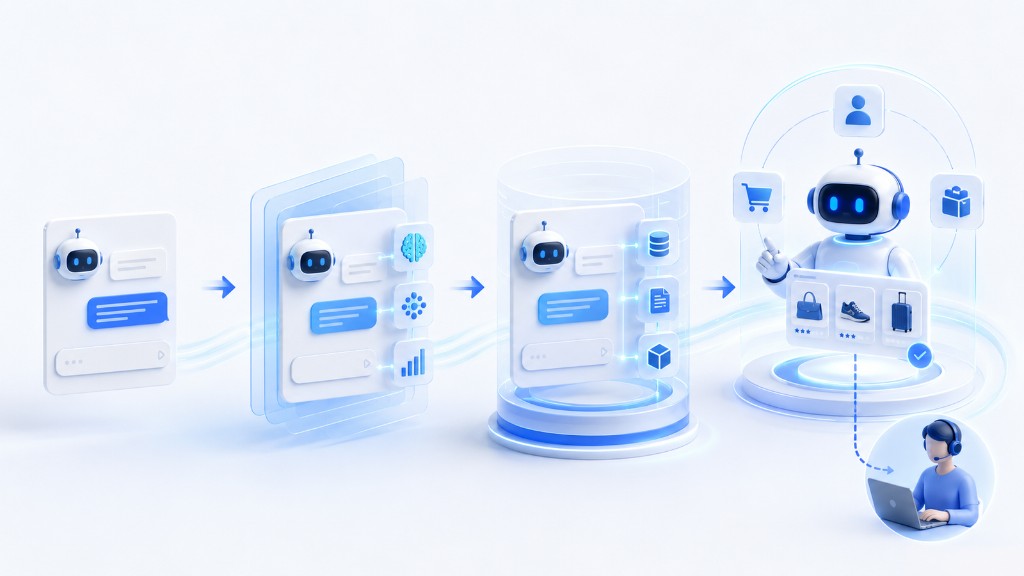
When people hear the word chatbot, many still picture a chat window that can only respond to button clicks or keywords. Conversational technology, however, has evolved through several levels: from traditional script-driven chatbots, to AI chatbots that understand natural language, to AI sales agents that can connect to data and carry out business steps.
These three concepts are often used interchangeably, which makes it easy for businesses to choose a solution that does not fit their actual problem. A system that answers FAQs does not necessarily need to be an AI Agent; conversely, a consultation process that requires checking inventory, booking appointments or creating orders will struggle to perform well if it relies only on a fixed conversation tree.
In this article, Agent-X helps businesses clearly understand each level, how they relate to one another, and the criteria for choosing the right fit for sales and customer care operations.
What is a traditional chatbot?
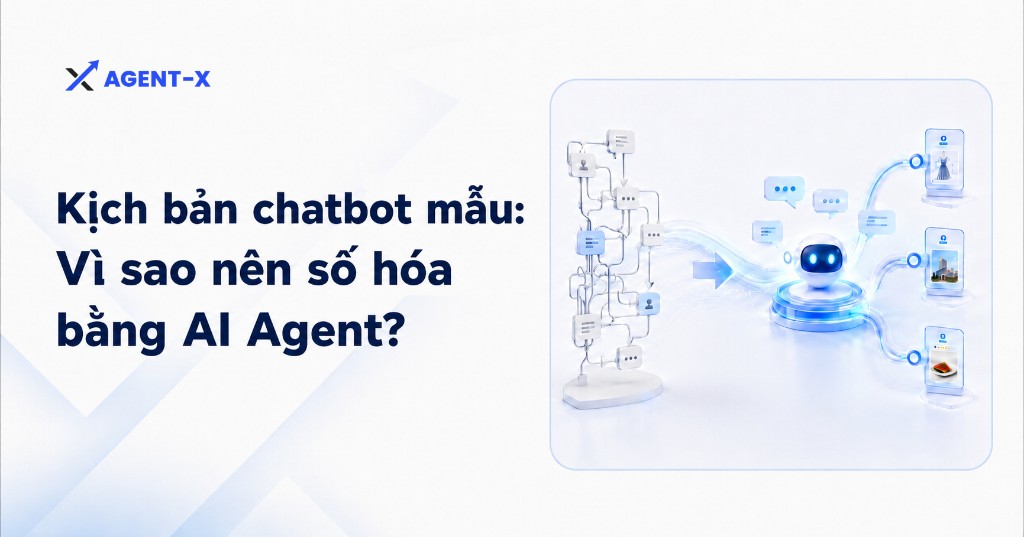
A traditional chatbot is software that interacts with users based on predefined rules. The system typically uses buttons, keywords, menus or conversation trees to guide customers to a prepared answer.
For example, when a customer selects “Check order,” the bot asks for the order number and then passes the data to the lookup system. If the customer asks exactly the expected question and follows the anticipated flow, the chatbot can respond quickly and consistently, saving the team significant handling time.
Traditional chatbots are well suited to:
- Frequently asked questions with stable answers, such as opening hours, addresses or general policies.
- Simple processes with few branches and clearly defined inputs.
- Routing customers to the right form, department or information source.
- Cases where the business needs tight control over every single answer.
Limitations appear when customers do not use the exact keywords, pack several requests into one message, change the subject or refer back to information from an earlier exchange. Because the bot does not truly understand intent and context, the business has to keep adding branches to its chatbot script template. The bigger the conversation tree, the more complex it is to maintain, yet it still struggles to cover every way customers express themselves.
What is an AI chatbot?
An AI chatbot is a conversational system that applies artificial intelligence to recognize intent, understand natural language and generate context-based responses. Instead of requiring customers to use the right keywords, the system can recognize many different ways of expressing the same need.
For instance, “Does this style come in cream?”, “Is there a lighter shade?” and “I want the color in the photo” may all relate to the same need: finding a color variant. An AI chatbot connected to the right data sources can understand this connection and continue the conversation without forcing the customer to start over.
An AI chatbot typically has four core capabilities:
- Natural language understanding: recognizes intent, entities and key information in the question.
- Context retention: links conversation turns to know which product or issue the customer is talking about.
- Knowledge retrieval: finds information in the knowledge base, documents or authorized data sources.
- Response generation: phrases answers flexibly based on the question and the current context.
AI chatbots make conversations feel more natural, but that does not mean the system can fully handle every process on its own. If data is not kept up to date, the scope of answers is unclear or there is no control mechanism, AI can still give inaccurate responses. Businesses need to define which data sources may be used, rules for asking follow-up questions, situations where the bot should decline to answer, and when to hand over to staff.
What is an AI sales agent?
An AI sales agent is an AI agent designed to pursue a business goal within a defined scope of permissions. The system not only generates answers but can also analyze the state of the conversation, plan the next processing step, use tools and coordinate data to complete the task.
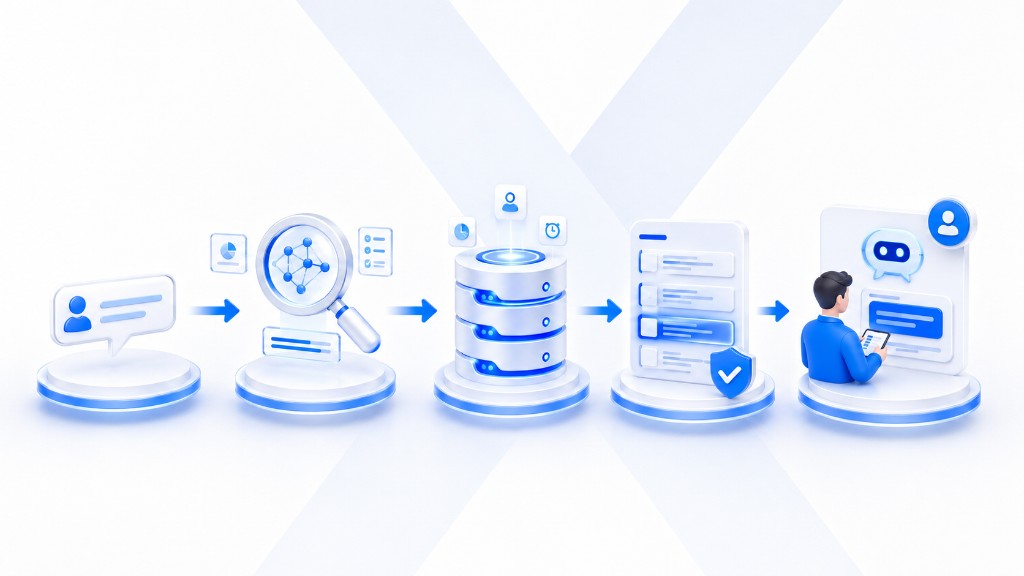
In a sales process, an AI Agent can:
- Identify products, needs, budget and buying signals.
- Check product information, inventory, policies or available time slots from authorized sources.
- Ask for missing data instead of repeating the entire form.
- Recommend suitable products based on criteria and business rules.
- Collect information, book appointments, help create orders or update systems.
- Hand over to staff along with a summary of needs and the conversation history.
The key point is that an AI Agent should not be understood as AI operating freely. A trustworthy system must have clear goals, access rights, confirmation conditions and action limits. High-risk operations such as changing prices, issuing refunds or making policy commitments still require an appropriate approval mechanism.
The relationship between AI chatbots and AI sales agents
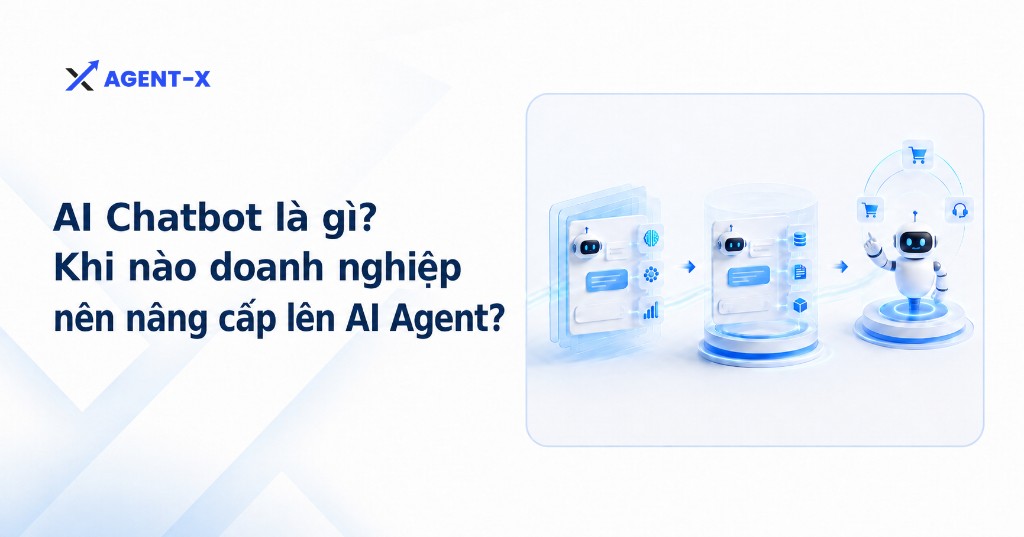
AI chatbots focus on conversational capability; AI Agents focus on the ability to achieve goals. An AI sales agent can use an AI chatbot as its interface for communicating with customers, but underneath there are additional layers for planning, data retrieval, tool use, condition checking and handover management.
This can be summarized as follows:
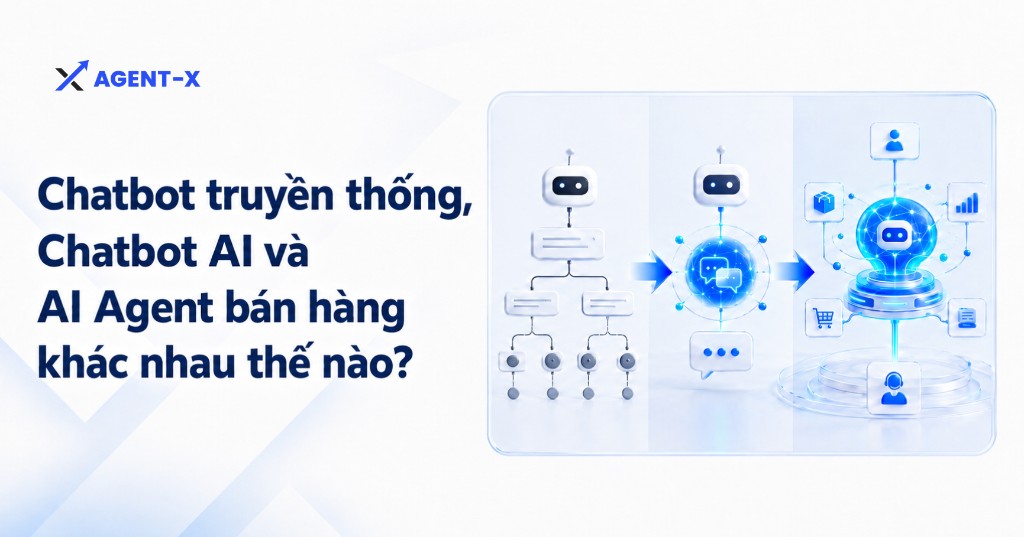
- Traditional chatbots respond according to pre-written flows.
- AI chatbots understand questions and generate more relevant responses.
- AI sales agents use conversation to coordinate data and actions, moving customers toward a concrete outcome.
With XOmnichannel - the omnichannel AI sales assistant developed by Agent-X, the AI chatbot is more than just a message-reply window. The system is designed to connect omnichannel conversations with sales data and processes, so AI can support consultations, identify buying signals, check conditions before performing tasks and hand over to staff when needed.
A comprehensive comparison: traditional chatbots, AI chatbots and AI sales agents
Traditional chatbots, AI chatbots and AI sales agents differ not only in conversational ability but also in how they use data, handle business operations and generate business results. The table below helps businesses clearly distinguish the three technologies and choose the solution that fits their actual needs.
| Criteria | Traditional chatbot | AI chatbot | AI sales agent |
|---|---|---|---|
| How it works | Keywords, buttons, conversation trees and fixed rules | Understands natural language and generates context-based responses | Analyzes goals, chooses processing steps and uses tools within permitted scope |
| Customer understanding | Good when customers follow the expected flow | Understands many ways of phrasing and links conversation turns | Understands needs, identifies buying signals and determines missing information |
| Data used | Pre-entered content or integrations per flow | Knowledge base and connected data sources | Coordinates multiple sources such as products, inventory, CRM, appointments and orders |
| Ability to act | Answers, displays buttons or redirects | Mainly answers questions, searches and collects information | Can check conditions, book appointments, help create orders, update records or hand over |
| Exception handling | Prone to wrong branches or asking the customer to start over | Can ask follow-up questions or decline when data is missing | Recognizes its limits, chooses how to handle the case and hands over to a person at the right time |
| Output goal | Completes a single answer | Creates a natural, consistent conversational experience | Aims for outcomes such as qualified leads, appointments, orders or resolved requests |
| Implementation effort | Fast for simple processes | Requires data, instructions and response controls | Requires system integration, permissions, monitoring and process design |
No technology is always better in every situation. If the need is simply to display opening hours or redirect to a lookup page, a traditional chatbot may be sufficient and easy to control. If customers often ask in many different ways, an AI chatbot is a better fit. When a business wants to move from “answered” to “resolved,” an AI sales agent is what makes a clear difference.
Which type of chatbot should a business choose?
The right solution should be determined by operational goals rather than by how new the technology is. A stable process with few variables does not necessarily require an AI Agent; conversely, conversations that need to coordinate data and actions will struggle to be effective with only a script-based chatbot.
| Business goal | Suitable solution | Reason for choosing |
|---|---|---|
| Answer common questions, display menus or redirect to forms | Traditional chatbot | Clear process, content that rarely changes and a need for tight control over each response branch |
| Understand many ways of phrasing, search the knowledge base and maintain context | AI chatbot | Suited to high question volumes and the need for more natural responses |
| Move conversations toward booking appointments, creating orders, updating the CRM or data-backed handover | AI sales agent | Coordinates conversations with data, tools and business rules within the authorized scope |
| Automate at scale while still maintaining in-depth consultation | Agent-Force model | Combines AI's processing power with human expertise, empathy and accountability |
Agent-Force - The ideal collaboration model between AI sales agents and people to break through in sales
Once the right role for each technology has been defined, the optimal operating approach is not necessarily to hand the entire journey to AI. The Agent-Force model combines AI Agents and the sales team according to each side's strengths: AI handles high conversation volumes, repetitive tasks and data standardization steps; people focus on in-depth consultation, negotiation, handling emotions and decisions that carry a high level of responsibility.
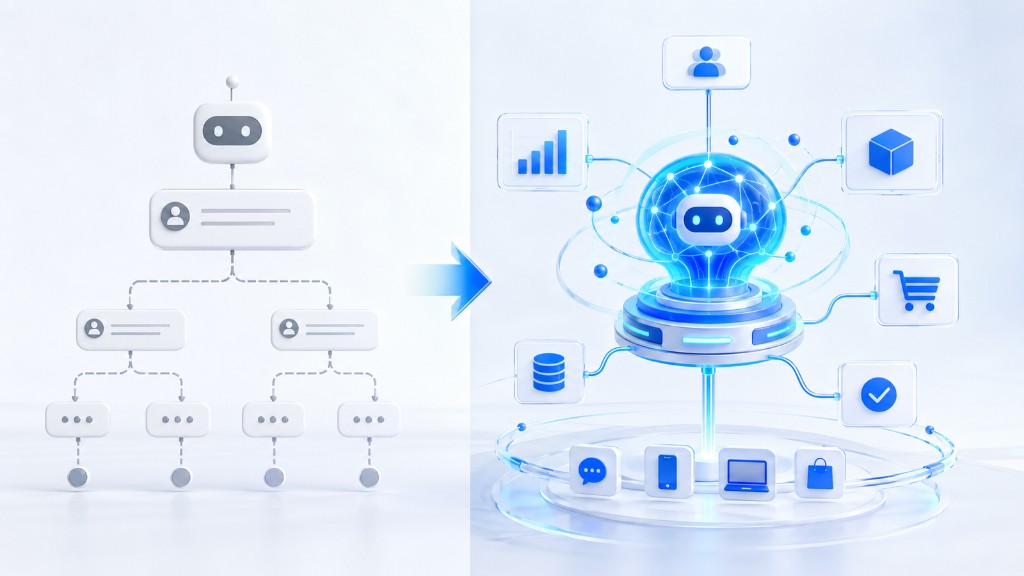
An effective collaboration model typically has three layers:
- AI receives conversations, screens needs and standardizes input data.
- The system identifies handover conditions such as high-value buying signals, complaints or out-of-scope requests.
- Staff take over with a summary, the collected data and the reason for the handover, so customers do not have to provide their information again.
Frequently asked questions about AI chatbots and AI sales agents
The answers below help businesses better understand the use cases, implementation requirements and how AI sales agents operate in practice.
Is an AI sales agent a chatbot?
An AI sales agent can interact with customers through a conversational interface similar to a chatbot, but its scope is broader. Beyond answering questions, an AI Agent can also retrieve data, handle multi-step processes and perform operations such as checking inventory, creating orders, booking appointments or updating customer information in the system.
Should a business choose an AI chatbot or an AI sales agent?
An AI chatbot is a good fit when a business mainly needs to automate responses, answer questions and advise customers in natural language. An AI sales agent is a good fit for processes that require connecting data and producing concrete results, such as identifying needs, recommending products, checking information, creating orders or booking appointments. The choice should be based on the operational problem rather than simply on the number of features.
Can an AI sales agent completely replace staff?
An AI Agent does not necessarily replace sales staff entirely. It is well suited to handling repetitive tasks, looking up information, responding to customers and supporting the standard steps of the sales process. Staff still play an important role in complex or sensitive situations, or those that require in-depth consultation and building customer relationships.
What data does a business need to prepare to deploy an AI Agent?
Businesses need to prepare data sources directly related to sales operations, such as product information, prices, inventory, promotions, policies, transaction history and customer data. In addition, processes such as consultation, handover to staff, order creation or appointment booking also need to be clearly defined so that AI operates within the right scope.
Can an AI Agent connect to a CRM and order management system?
Depending on the solution and the business's infrastructure, an AI Agent can connect to the CRM, order management system, inventory, appointment scheduling and other business platforms. Integration allows AI to retrieve up-to-date data, record interaction outcomes and perform operations right during the consultation, rather than just providing information to customers.
How can you reduce the risk of AI giving incorrect advice?
Businesses need to connect AI to official data sources and regularly update product information, prices, inventory and policies. The scope of AI's answers and actions must also be clearly defined. When data is missing or a situation exceeds its capabilities, AI should request verification or hand over to staff instead of guessing.
Conclusion
Traditional chatbots, AI chatbots and AI sales agents are not mutually exclusive. They represent three different levels of automation: from flow-based responses, to conversation understanding, to coordinating data and actions.
Businesses should start from the outcome they need to achieve. If the goal is to answer common questions, a simple chatbot may be enough. If understanding context is required, consider an AI chatbot. If you want conversations to lead to appointment bookings, order creation or controlled handover, an AI sales agent is the more suitable next step.